Rising Hubs: How Austin and Nashville Became Tech Epicenters
Austin, Nashville, and the code-culture convergence
Rising Hubs: How Austin and Nashville Became Tech Epicenters
On a warm spring afternoon in Austin, the smell of brisket and the thrum of code waft through the same air. Near the city’s South Congress Avenue, a new coworking space has popped up next to a vinyl shop and a vegan taqueria. Inside, a group of young developers is pitching a blockchain-based supply chain solution to a venture fund from Boston. The lead engineer is wearing cowboy boots. The investor nods over a Topo Chico. There are no illusions here—this isn’t Silicon Valley. This is something else. Something newer. Something that belongs to the moment.
About 850 miles to the northeast, in Nashville’s Wedgewood-Houston neighborhood, a drone technology startup called Synera Labs is demonstrating an AI flight path optimization tool in a warehouse that once housed printing presses. Down the block, a music producer runs an NFT platform out of a retrofitted studio next to an Ethiopian coffee bar. The vibe is part startup, part honky-tonk, part moonshot.
For a while now, the idea that technology had to orbit the Bay Area has been unraveling. But what’s rising in its place isn’t just a de-centralized tech economy—it’s a new map. And on that map, Austin and Nashville sit front and center.
These two cities have become unlikely twin stars in the American innovation constellation. What makes them stand out isn’t just their swelling job numbers or the growth of data centers. It’s the fact that their rise is organic, culturally resonant, and—above all—rooted in their own identities. They didn’t try to become “the next Silicon Valley.” They became the first versions of themselves.
From Bootstrapped to Boomtowns
Austin’s tech story goes back decades, to when IBM, Motorola, and Dell set up operations in the 1980s and ‘90s. But what was once a sleepy outpost for hardware manufacturing is now an energetic software scene driven by cloud computing, crypto, biotech, and AI. The turning point came in the mid-2000s when the cost of living in the Bay Area became unsustainable for many early-stage entrepreneurs. Austin’s mix of warm climate, liberal arts energy, and business-friendliness made it a magnet.
Nashville’s ascent has followed a different path. Known for decades as “Music City,” it has long attracted creative talent and entrepreneurs from the recording industry, healthcare administration, and higher education. But the last 10 years have seen a pivot. With state investments in infrastructure and tech training programs, the city began to quietly build capacity. By 2023, Amazon had opened a 5,000-job operations hub downtown. Oracle announced a $1.2 billion riverfront campus. Suddenly, the question wasn’t whether Nashville could attract tech—it was how fast it could scale.
Talent Follows Culture
“I moved to Austin because it didn’t feel corporate,” says Irene Ng, a software architect originally from the Bay Area. “It had music, it had personality, and my rent was half what it was in Menlo Park. But the talent here? Just as good.”
Ng isn’t alone. According to LinkedIn’s Workforce Migration Report, Austin and Nashville have been two of the top five inbound tech talent cities in the U.S. since 2021. What’s drawing them isn’t just tax policy or investor capital—it’s culture.
Both cities offer what urban sociologists call “third spaces”—public or semi-public gathering spots that allow for informal collaboration and community. In Austin, that might be a bar with Wi-Fi and open mic night. In Nashville, a songwriting circle that turns into a pitch meeting. The creative energy is palpable.
Real Estate and the Rise of “Tech Lifestyle”
The explosion of talent also demanded new types of real estate. In Austin, old warehouses in East Austin have been re-zoned into office-lofts and innovation districts. The Mueller neighborhood, once an airport, is now a mixed-use tech campus complete with bike trails and solar-paneled rooftops. Meanwhile, Domain NORTHSIDE, sometimes dubbed “Austin’s second downtown,” blends high-end shopping with Amazon offices and VR startups.
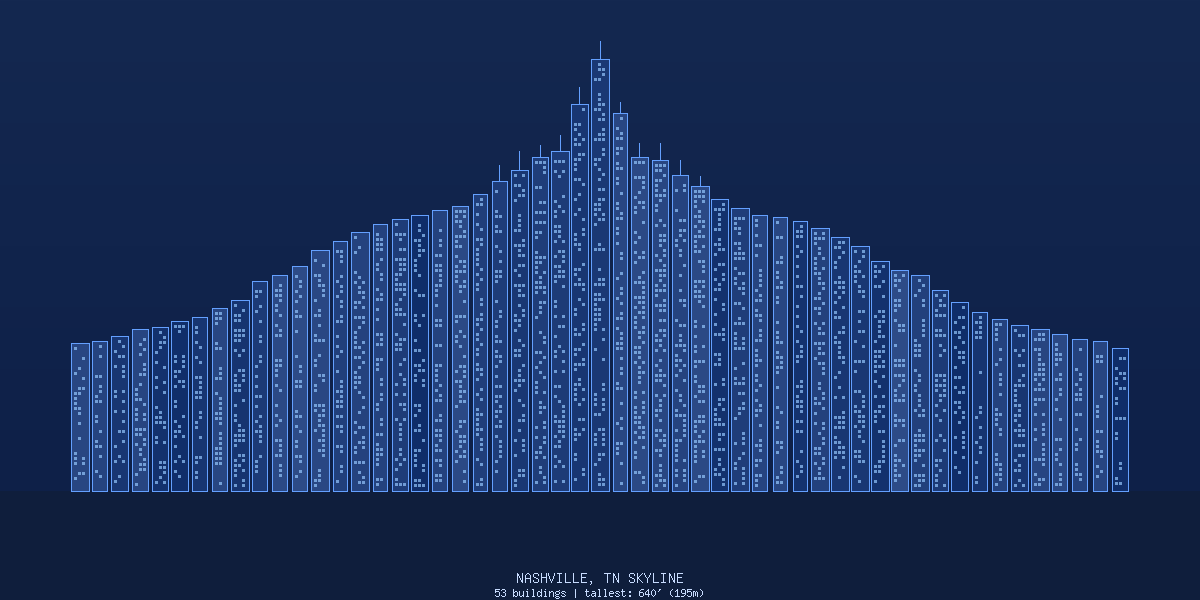
In Nashville, the Gulch and Wedgewood-Houston neighborhoods are now innovation corridors. The Nashville Yards development—where Amazon’s hub sits—is not just a business park; it includes concert venues, boutique hotels, and coworking towers. It’s downtown density with a downtown soundtrack.
Developers in both cities have leaned into the “live-work-play” paradigm. This has given rise to a new genre of real estate: places where tech meets tacos, or cloud platforms meet craft beer. The result is a magnetic urban form that appeals to Gen Z and millennial workers looking to integrate their professional and social lives.
Policy and the Soft Power of Mayors
“Cities win when mayors act like startup CEOs,” said John Cooper, former mayor of Nashville, in a 2022 policy summit. “We recruited companies, but we also invested in sidewalks, parks, and broadband. Talent won’t stay if the quality of life is broken.”
Both Austin and Nashville have benefited from mayors who understood that civic tech isn’t about buzzwords—it’s about infrastructure. Austin launched “Smart City” initiatives with sensors on traffic lights, real-time bus tracking, and open data portals. Nashville digitized its permitting system and established a tech incubator through the Nashville Entrepreneur Center.
State-level policy helped, too. Tennessee’s lack of state income tax was a draw, but so were aggressive workforce retraining programs in partnership with local community colleges. In Texas, the state offered incentives for chipmakers and cleantech manufacturing, attracting Tesla’s Gigafactory and Samsung’s massive semiconductor complex in Taylor.
Ecosystem Maturity: From Startups to IPOs
What defines a mature tech ecosystem? It’s not just incubators or VC funding—it’s the ability to scale. Austin has passed that threshold. Homegrown companies like Indeed, Bumble, and WP Engine have scaled internationally. Others like Jasper.ai and Icon (a 3D-printed housing startup) are pushing technological boundaries and fundraising well into Series C.
Nashville, though smaller, is catching up fast. Healthcare startups like Contessa and pharmacy data platforms like Trilliant Health have gained national traction. The city’s crossover with healthcare and fintech has made it a hotspot for applied AI in regulated sectors.
Investor capital has noticed. VC funding in Nashville hit $2.3 billion in 2024, up from just $350 million in 2019. Austin surpassed $6.5 billion. National firms like Andreessen Horowitz and Sequoia have opened outposts or co-working spaces in these markets.
Challenges: The Price of Growth
But growth brings friction. Austin’s housing prices have soared, making affordability a concern. Traffic congestion and gentrification have challenged its laid-back reputation. Nashville faces similar pressures, with rising rents threatening long-standing creative communities and historic neighborhoods.
Still, both cities are responding. Inclusionary zoning, affordable housing bonds, and transit investments are part of the conversation. More importantly, many startups are focused on community impact—whether through climate resilience tech, workforce equity, or public health platforms.
Lessons for Other Cities
What can other aspiring tech hubs learn from Austin and Nashville?
- Anchor to Culture: These cities didn’t whitewash their identities. They built on them. That authenticity is what attracted talent and kept them there.
- Invest in Place: Sidewalks matter. So do transit lines, coworking cafes, and mixed-use zoning. Innovation needs infrastructure.
- Don’t Chase Giants—Grow Your Own: While it helps to attract Amazon or Oracle, long-term vitality comes from cultivating startups that stay.
- Cross-Pollinate Sectors: Austin leverages its design and music legacy in product UX; Nashville bridges music, healthcare, and finance in novel ways. Sector blending breeds innovation.
The Future of Mid-Tech
If the first wave of tech cities was about scale, the second is about texture. Austin and Nashville are textured cities—multidimensional, human, alive. They represent a future in which tech isn’t an industry overlaid onto a city, but a force grown from within.
From taco trucks to biotech labs, honky-tonk stages to drone launchpads, these cities have become more than boomtowns. They are blueprints. And in a nation eager to reimagine economic geography, they offer a powerful message: The next Silicon Valley doesn’t look like the last one.
It looks like South Congress on a Friday night. Or the Cumberland River skyline after sunset. It sounds like code and jazz, pitch decks and pedal steel.
The future isn’t out west. It’s right here.
Sources & Bibliography