Live Where You Work: The Conversion Revolution
The office conversion boom sweeping America's central business districts—a $50 billion reallocation of real estate capital—reflects not pandemic disruption but the fundamental economic collapse of the traditional office tower in an age of workplace automation. As AI and robotic process automation eliminate the white-collar jobs that historically justified dense office concentration, metropolitan areas from Manhattan to Chicago face massive vacancy rates that make residential conversion financially compelling: a 500,000-square-foot office building worth $100 million in sunk costs can yield $280 million in residential asset value. City governments have accelerated this transition by dismantling zoning barriers and parking requirements, recognizing that downtown deterioration poses greater fiscal risk than regulatory disruption, yet the outcome remains uncertain—current conversion projects are producing luxury apartments at rents inaccessible to middle-income residents rather than solving urban affordability. The real takeaway for executives is that physical office infrastructure, optimized for a labor model that no longer exists, has become stranded capital, and the cities that manage this transition successfully will emerge with revitalized downtowns while those that don't will face irrelevance rather than mere vacancy.
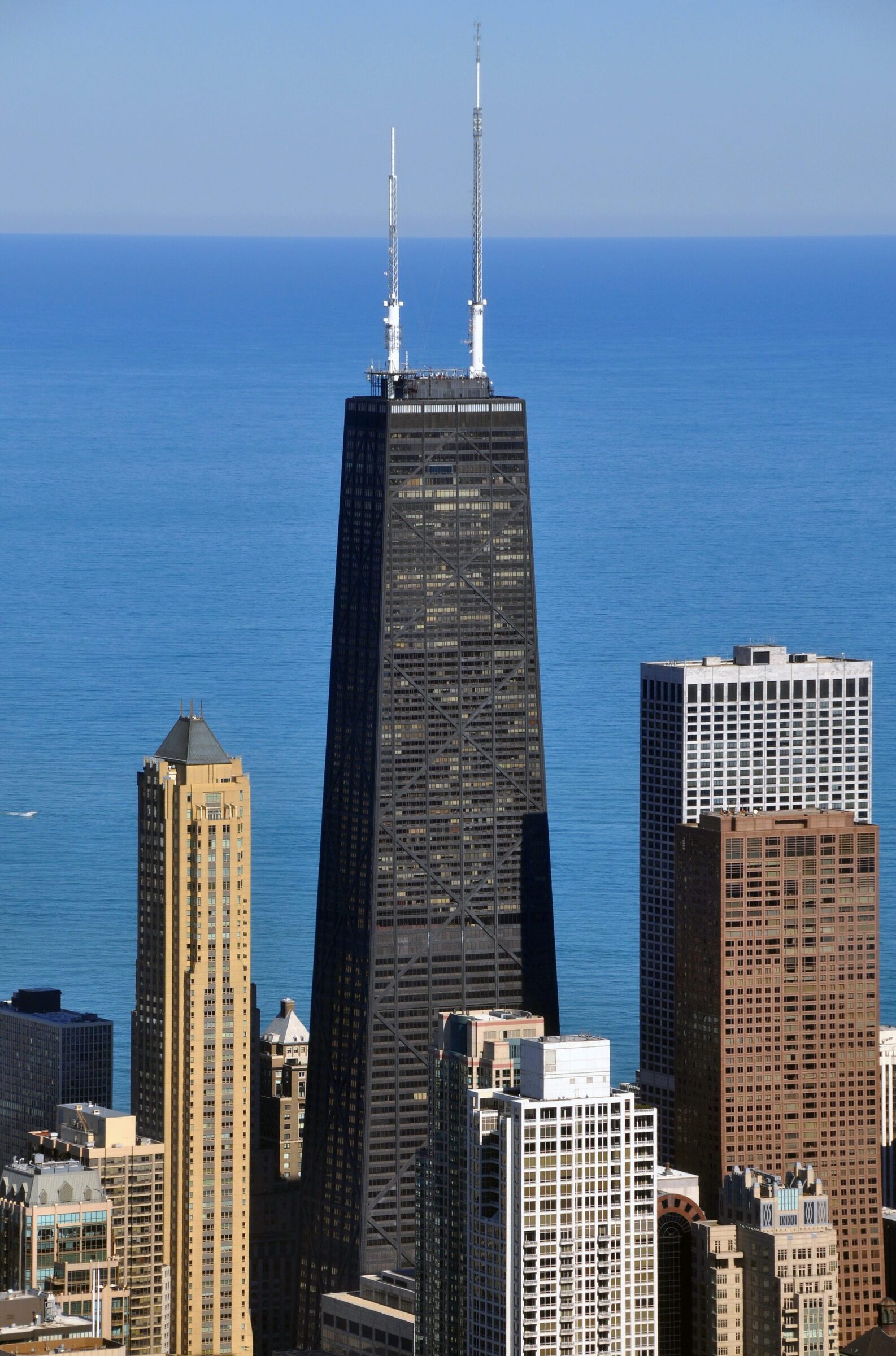
The office building at 425 Fifth Avenue in Manhattan has stood nearly vacant for two years, its gleaming facade now a monument to obsolescence. Built in 1985 at the height of the financial services boom, it once housed hundreds of traders and analysts in cramped cubicles. Today, most floors sit dark. The building's owner recently submitted plans to the Department of City Planning: convert 80 percent of the space into residential apartments. It is one of thousands of similar projects now underway across America's central business districts, representing what industry analysts estimate at a $50 billion capital reallocation reshaping the vertical city itself.
The conversion revolution is not simply a response to pandemic-era remote work, though that accelerated the timeline considerably. Rather, it reflects a fundamental structural shift in how artificial intelligence and automation are reconfiguring workplace geography and real estate economics. As routine cognitive work becomes increasingly automated, the density-dependent office tower—built on the premise of maximizing square footage for white-collar workers—has become economically unstable.
The Automation Dividend and Its Real Estate Costs
Consider the numbers: since 2020, major metropolitan areas have experienced office vacancy rates exceeding 20 percent in secondary markets and pushing toward 15 percent even in flagship business districts. Chicago's Loop now has nearly 50 million square feet of vacant or underutilized space. San Francisco's office market has contracted by roughly 30 percent. Yet this supply glut emerged not primarily from remote work policies—many of which have reversed or moderated—but from structural job displacement.
McKinsey estimates that AI and robotic process automation could affect between 400 and 800 million jobs globally by 2030, with developed economies absorbing disproportionate impacts in administrative, analytical, and customer service roles. These are precisely the occupations that historically justified the concentrated office tower. When a mid-sized insurance company can deploy machine learning to underwrite policies previously requiring 200 analysts, the justification for floor plates designed for that workforce collapses instantly. The brick and glass structures optimized for industrial-era information processing have become what economists call stranded assets—capital locked in an obsolete configuration.
Conversion economics suddenly make sense. In Manhattan, a 500,000-square-foot office building valued at $200 per square foot carries $100 million in sunk cost. Converting 80 percent to residential yields roughly 400 units at an average development cost of $700,000 per unit—totaling $280 million in final asset value, with unit prices supporting $1,200 to $2,000 monthly rents. The arbitrage favors housing.
The Regulatory Acceleration
City governments, recognizing downtown retail and service sectors depend on residential density, have begun removing conversion barriers. New York eliminated the requirement that converted residential space maintain commercial square footage. Philadelphia relaxed parking minimums for office conversions. Chicago expedited zoning variances for downtown residential projects. These are not accidental policy shifts but rational responses to prevent downtown deterioration.
The risk calculus has inverted: abandoning downtown cores represents greater fiscal threat than disrupting established zoning hierarchies. Cities fear becoming "back office" districts—aging landscapes populated only by tourism and occasional foot traffic.
The Human Element
What remains genuinely uncertain is whether downtown living spaces will attract permanent residents or remain expensive pied-à-terre for the already-wealthy. The most ambitious conversion projects assume that younger workers—particularly those in AI, biotechnology, and creative fields—will embrace downtown living as a lifestyle choice rather than a commuting necessity. This reflects an aspirational urbanism: densely packed, culturally rich neighborhoods replacing the office-bound monoculture.
Yet current conversion occupancy data presents mixed signals. Early projects in secondary markets achieved 75 percent occupancy within 18 months. Flagship Manhattan conversions report stronger absorption, though at price points that exclude middle-income households. The conversion boom may ultimately produce luxury housing in downtown locations rather than meaningfully addressing urban affordability—essentially swapping one form of spatial inequality for another.
The office conversion phenomenon ultimately reflects not nostalgia for urbanism but rational capital responding to technological disruption. As machines absorb routine cognitive work, the geographic concentration that powered industrial and information-age cities loses its organizing logic. Cities that successfully transition these spaces toward livable downtown cores may discover new utility in old towers. Those that fail will face a different obsolescence: not vacancy, but irrelevance.



✎ From the Publisher
☰ In This Book
- The Future of Work ★ FEATURE
- Look Back 100 Years: Jobs That Didn't Exist in 2025
- Rise of the Machines: Robots Reshaping Labor
- Skilled Trades in the Age of Automation
- Present and Future Schools
- Learning the Grid: AI and the Future of Infrastructure Management
- Work Across the Map: Jobs from Farm Towns to Global Cities
- Live Where You Work: The Conversion Revolution ← you are here
- Work Without Walls: The Corporate Retreat from Downtown Offices